



When we’re recruiting people to our company, as well as evaluating their performance, we pay attention not only to their competence, experience, but also soft skills, fit for our company and our values. We all know that the specifics of our work require COOPERATION. Without this, we would not be able to achieve our business goals.
That's why we recommend identifying Ideal Team Member traits during recruitment, according to the model described by Patrcick M. Lencioni's in book "The Ideal Team Player".
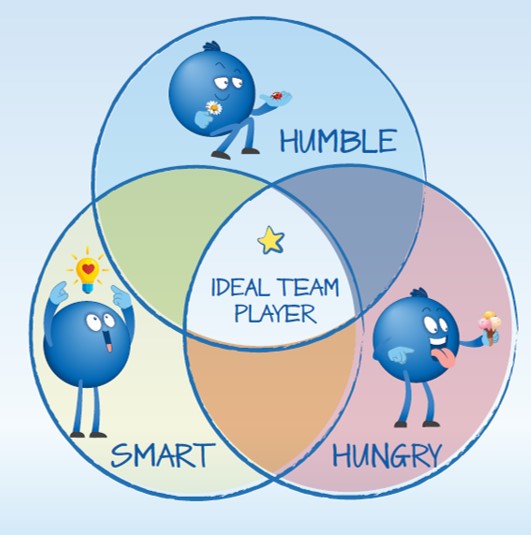
This model is based on three virtues: HUMBLE, HUNGRY AND SMART
- HUMBLE
This virtue is characterized by people who do not place undue importance on their own position, do not attribute qualities they do not have, but also do not belittle themselves. The Ideal Team Player does not have an inflated ego that commands to seek praise for merits. At the same time, Ideal Team Player is able to appreciate the work of others and treats success as a joint achievement.
- HUNGRY
People who are hungry for knowledge and continuous development want to take more and more responsibility and constantly improve their skills. They have strong personal motivation and are conscientious about their tasks. They are eager to share knowledge with other team members, inspire and encourage to self-development.
- SMART
Smart people are able to understand the behavior of team members and adapt to situations. They respect others by listening carefully to them and asking clarifying questions. The Ideal Team Player is full of energy, works with passion and supports the team in every possible way.
The strength of this model is the skillful combination of the three defined traits so that they support and complement each other. Single traits are not enough to profile the Ideal Team Player.
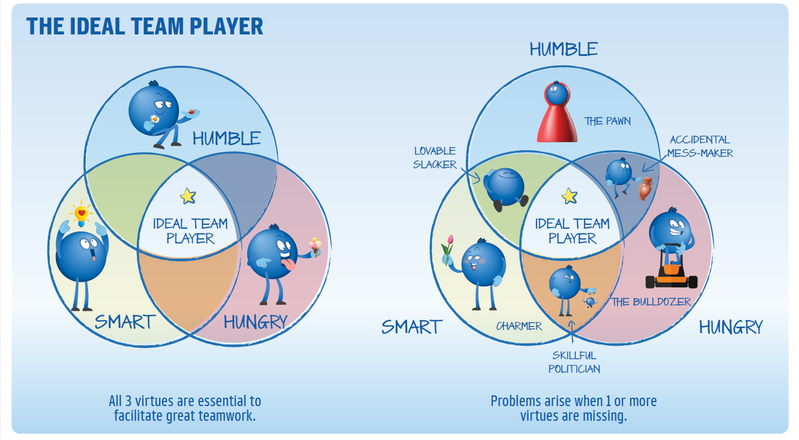
Please remember that:
- working with people lacking the 3 key traits requires more time, attention and patience from the manager,
- unsuitable people can hinder team building or impede team development,
- people lacking the 3 key qualities can create a toxic work environment in which even the most resilient and persistent can lose motivation and commitment after a while.
Materials: